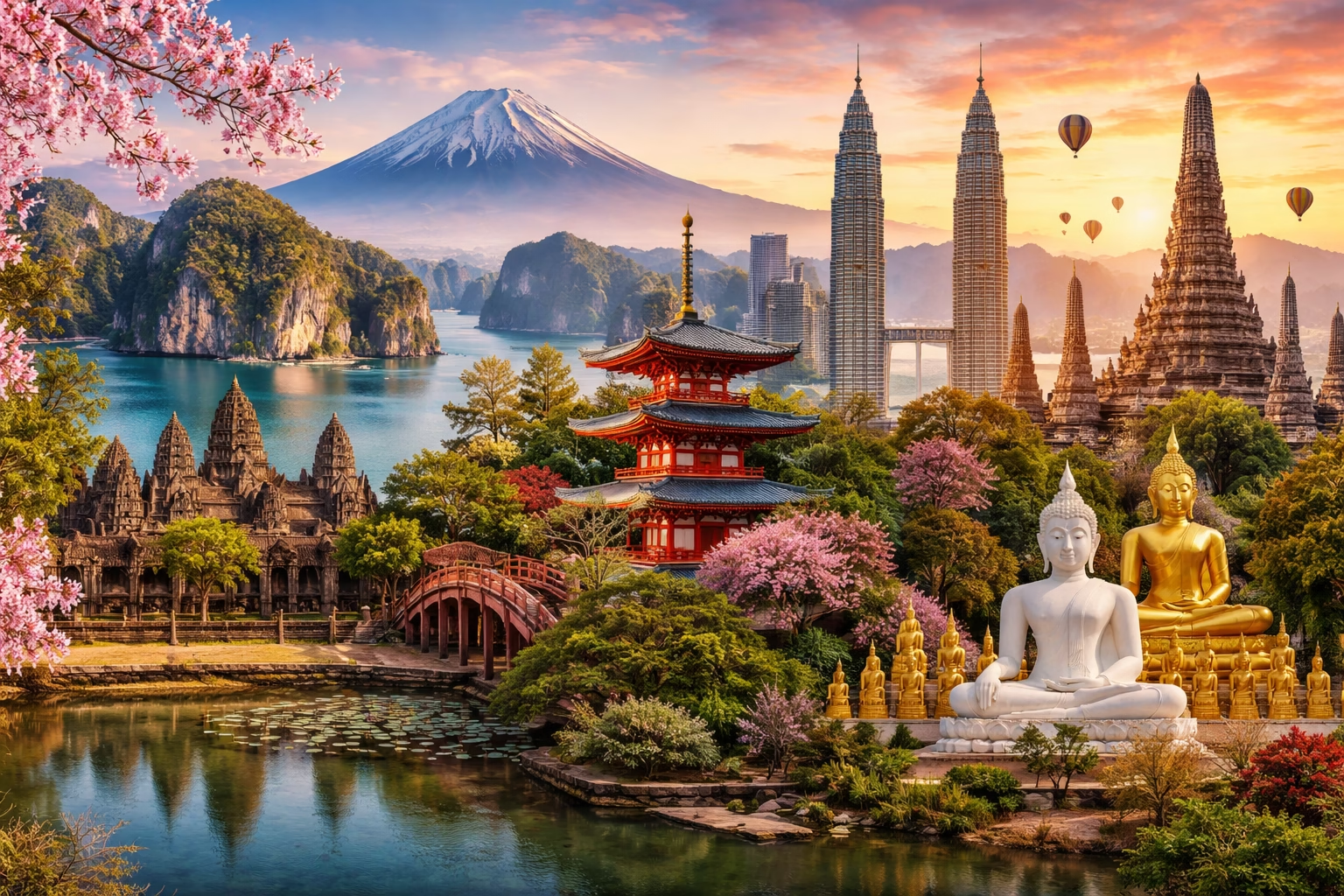
Asia is a continent of extraordinary contrasts and endless wonder. From the glacial peaks of the Himalayas to the turquoise beaches of Southeast Asia, the historic corridors of the Middle East to the neon skylines of East Asia, every corner of this vast continent offers a unique rhythm of life. Yet, timing is everything. Climate patterns vary dramatically from country to country, and planning your visit around these shifts can make the difference between a perfect journey and a challenging one.
- Plan travel around regional seasons and monsoons to maximize clear skies, calm seas, and ideal trekking conditions.
- Visit during local shoulder seasons (spring and autumn) for pleasant weather, fewer crowds, and vibrant festivals like cherry blossoms or Diwali.
- Book peak-season travel early for top beach and diving months, or choose wet season for lower prices and fewer tourists.
In this guide, we will explore the best time to visit key countries across Asia, considering local climate, festivals, and travel conditions. Whether you dream of soaking up tropical sun or chasing cultural festivals, this article will help you decide when to go as much as where to go.
Japan: Blossoms, Seasons, and Cultural Balance
Japan is one of the few destinations that truly shines in all four seasons, yet each period offers a distinct experience.
Best time to visit: March to May and October to November
Spring (March to May):
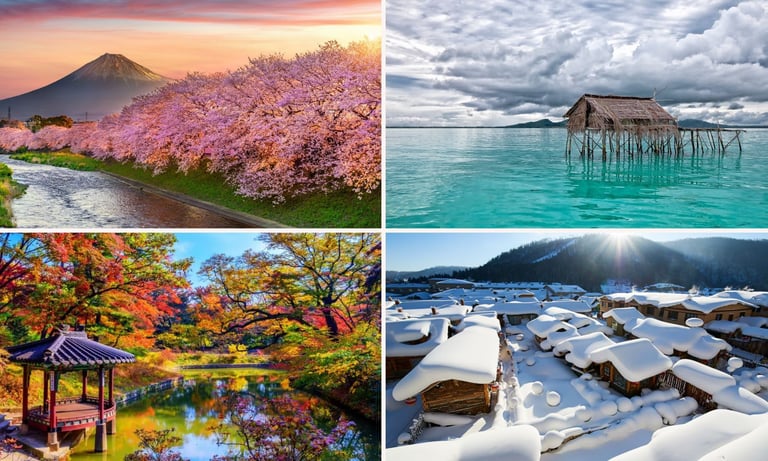
Cherry blossom season draws travelers from across the world. The entire country transforms into a soft pink wonderland, with peak bloom varying from south to north. In cities like Kyoto and Tokyo, late March to early April is typically ideal. Spring temperatures are mild, and the air feels alive with celebrations and outdoor picnics.
Autumn (October to November):
The colors of autumn rival the blossoms of spring. Japan’s maple-covered mountains and temple gardens blaze in shades of red and gold. Weather is refreshingly cool, perfect for exploring Kyoto’s cultural sites or hiking around Mount Fuji.
Avoid visiting during the typhoon season from late summer to early autumn, particularly in coastal regions.

Thailand: Sunshine, Festivals, and Island Escapes
Thailand welcomes travelers year-round, but timing your trip wisely enhances comfort and enjoyment.
Best time to visit: November to early April
This dry season offers clear skies, calm seas, and pleasant temperatures across most regions. The islands of the Andaman Sea such as Phuket and Krabi are ideal at this time, as boat travel and diving are at their best.
For culture seekers: Visit in April for Songkran, Thailand’s traditional New Year, when locals celebrate with nationwide water festivals.
The monsoon season, from May to October, brings heavy rain to most areas, particularly in the south, but the northern cities of Chiang Mai and Pai remain relatively pleasant.

Vietnam: A Country of Two Climates
Vietnam’s geography stretches across several climate zones, meaning the best time to visit depends on which region you explore.
North Vietnam (Hanoi, Ha Long Bay, Sapa): October to April is cool and dry, while May to September is warm and humid with frequent rain. The cooler months are ideal for trekking in the northern mountains.
Central Vietnam (Hue, Hoi An, Da Nang): February to May brings the best balance of dry weather and comfortable temperature. Typhoons sometimes affect this region from late August to October.
South Vietnam (Ho Chi Minh City, Mekong Delta, Phu Quoc): December to April is the dry season, and it’s the best time for river excursions and beach holidays.
Given these variations, November to April offers the most balanced conditions for traveling across the entire country.

India: Festivals, Himalayas, and Diverse Seasons
India’s weather patterns are as varied as its cultures, stretching from the deserts of Rajasthan to the snowy borders of the Himalayas.
Best time to visit: November to March
These months provide clear skies and comfortable temperatures in most of the country. Rajasthan, Kerala, and Goa are particularly pleasant during this time, with warm days and cool nights.
For Himalayan travel: April to June is ideal for regions like Himachal Pradesh and Uttarakhand before monsoon rains arrive.
For cultural festivals: Diwali (usually in October or November) and Holi (usually in March) are unforgettable times to experience India’s energy and spirit.
The monsoon months from June to September bring lush greenery but can disrupt travel in some areas due to flooding and humidity.

Indonesia: Tropical Adventures Across Thousands of Islands
Indonesia is a tropical paradise that remains warm all year, yet rainfall defines the travel experience.
Best time to visit: May to September
This period coincides with the dry season, offering sunshine, calm seas, and clear skies ideal for exploring Bali, Java, and Komodo Island. July and August are peak months, so book accommodation early.
The wet season lasts from November to March, bringing heavy but brief rain showers. Many travelers still visit during this time to enjoy fewer crowds and lower prices.
Diving enthusiasts should plan around sea conditions: visibility around Komodo is best between March and October, while Raja Ampat offers superb diving between October and April.

China: Seasons of Change in a Vast Landscape
China’s immense size means the best time to visit depends on the region, but generally spring and autumn bring the most comfortable conditions.
Best time to visit: April to May and September to October
Spring offers fresh landscapes and fewer crowds, ideal for visiting Beijing’s imperial sites or hiking along the Great Wall. Autumn offers crisp air and blue skies, perfect for exploring cultural and natural attractions across the country.
Summer can be extremely hot and humid in cities such as Shanghai, while winter in the north, particularly Harbin, turns the landscape into a frozen wonder, famous for its spectacular Ice and Snow Festival.

Sri Lanka: Tropical Beauty Divided by Monsoon
Sri Lanka’s small size might mislead travelers into thinking its weather is uniform, but two monsoon systems affect different coasts at different times.
Best time to visit: December to March for the west and south coasts, May to September for the east coast
Traveling between these periods allows year-round exploration: when one coast experiences rain, the other enjoys sunshine. December to March is especially wonderful for beach escapes in Galle, Bentota, and Mirissa. From May to September, head east to Arugam Bay for surfing or to explore Trincomalee’s tranquil beaches.
The interior highlands, including Kandy and Nuwara Eliya, remain pleasantly cool throughout the year.

Nepal: Mountains, Culture, and Clear Skies
For trekkers and culture lovers, timing a trip to Nepal is all about clear skies and mountain visibility.
Best time to visit: October to early December and March to April
The post-monsoon period from October to December offers the clearest skies and best mountain views, making it the prime trekking season for routes like Annapurna and Everest Base Camp. The spring season from March to April brings blooming rhododendrons and warmer temperatures.
Winter months can be very cold in high altitudes, while the monsoon season from June to September brings heavy rain and landslides that make trekking difficult.

The Maldives: A Paradise of Sun and Sea
The Maldives has one of the most traveler-friendly climates in Asia, with warm temperatures year-round.
Best time to visit: November to April
This dry season ensures calm seas and endless sunshine, perfect for diving, snorkeling, and overwater villas. May to October brings occasional rain and rougher seas, yet many resorts remain open and offer competitive prices.
Whether you come for a honeymoon or a quiet retreat, the Maldives rewards visitors who plan around its weather cycles, particularly if you aim for ideal underwater visibility.

South Korea: Seasons of Style and Scenery
South Korea delights visitors through its distinct seasons, each offering something different for travelers.
Best time to visit: April to June and September to October
Spring brings cherry blossoms and mild temperatures ideal for exploring Seoul, Busan, and Jeju Island. Autumn offers crisp air and fiery foliage across the countryside.
Summer can be humid, with a monsoon season that usually peaks in July. Winter from December to February is cold but perfect for skiing in resorts like Pyeongchang or experiencing Seoul’s cozy cafes under a layer of snow.

Conclusion
Asia’s vastness means there is always a perfect destination waiting to be discovered at any time of the year. Understanding when to visit each country enhances not only comfort but also the depth of your experience. From cherry blossoms in Japan to golden beaches in Thailand, snow-capped peaks in Nepal to sunlit lagoons in the Maldives, each season reveals a new face of Asia. With thoughtful planning, your journey across this extraordinary continent can align seamlessly with its changing skies, ensuring every moment counts.
Further Reading
3 Day Istanbul Itinerary for First Time Visitors
Travel to Somalia; How I Traveled to Mogadishu
Free Family Things to do in Chicago Today
How to Spend Four Days in Hong Kong