
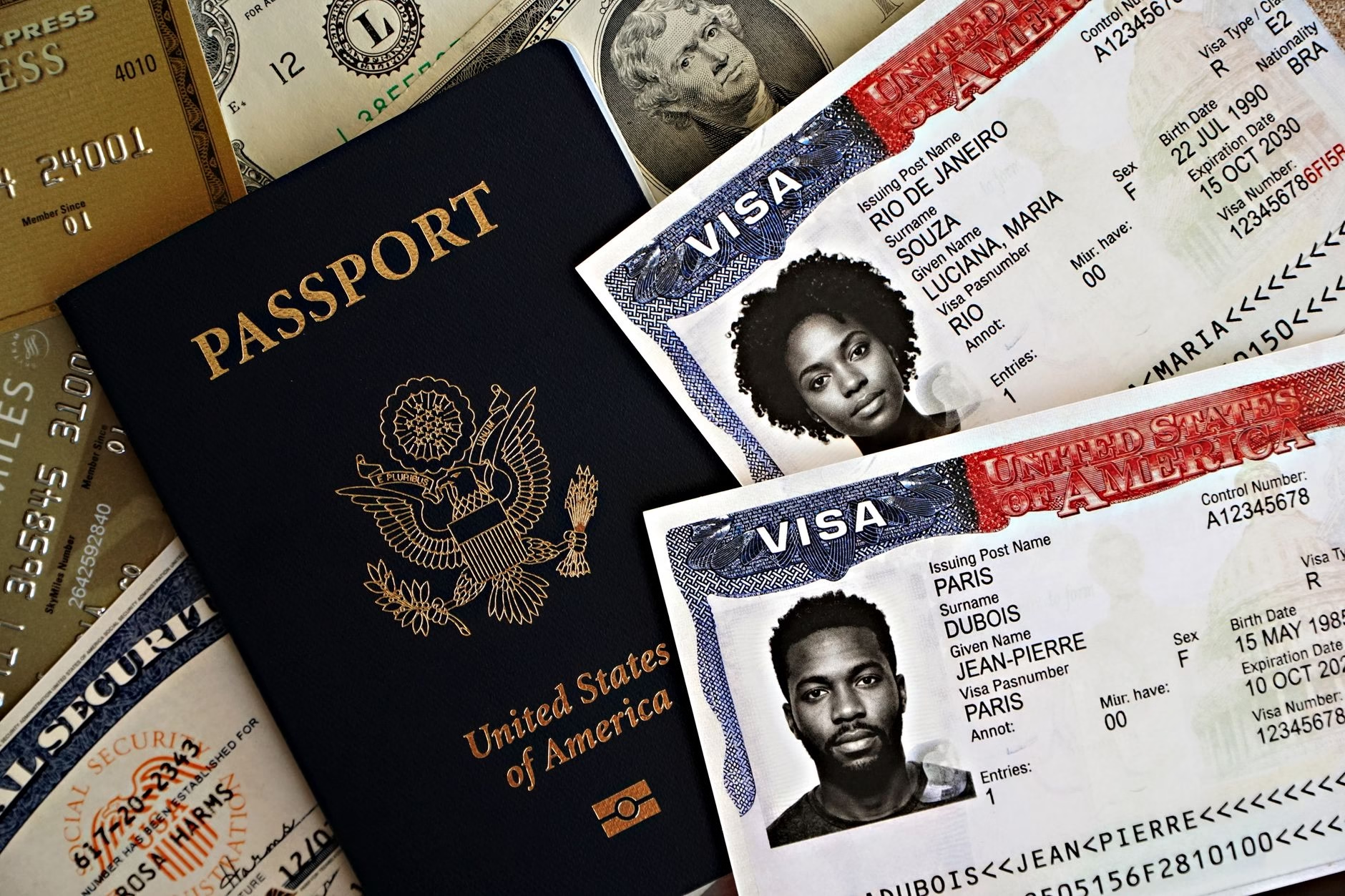
Traveling to Europe is a dream for many, whether it is to stroll through Parisian boulevards, explore the canals of Amsterdam, or discover the ancient heritage of Rome and Athens. However, before you can set foot on the continent, understanding the visa requirements for Europe is absolutely essential. Even the most seasoned travelers can find Europe’s visa rules a little confusing, given the number of countries, border agreements, and regional exceptions involved.
This detailed guide will give you a clear understanding of whether you need a visa to travel to Europe, the difference between the Schengen Zone and other European nations, how to apply for the correct visa, and what to expect when traveling across borders. By the end, you will have all the knowledge you need to plan your European trip efficiently and confidently.
Understanding the Schengen Zone
The Schengen Zone is at the heart of European travel. It is a group of European countries that have abolished internal borders, allowing travelers to move freely between member states once they hold a valid Schengen visa. This arrangement is one of the most important concepts to grasp when planning a European trip.
Currently, the Schengen Area includes most of the European Union countries as well as a few non-EU members such as Switzerland, Norway, Iceland, and Liechtenstein. The United Kingdom and Ireland are not part of the Schengen Zone, so they maintain their own visa systems.
Once you have a Schengen visa, you can travel freely among the member countries for up to 90 days within any 180-day period. This makes it ideal for multi-country trips, allowing travelers to experience France, Germany, and Spain without having to apply for separate visas.
Who Needs a Schengen Visa and Who Does Not
Not everyone needs a visa to visit Europe. The requirement largely depends on your nationality and the destination countries you plan to visit.
Visa-exempt travelers generally include citizens from the United States, Canada, Australia, New Zealand, Japan, South Korea, and several others. They can enter the Schengen Area without a visa for short stays (up to 90 days). However, these travelers will soon need to apply for an ETIAS travel authorization once it comes into effect.
Travelers who require a Schengen visa must apply before arrival. This group typically includes nationals from countries such as India, China, the Philippines, South Africa, and many parts of Africa and the Middle East. The Schengen visa allows travel throughout the member states once issued, but the traveler must enter through or spend the most time in the country that issued the visa.
Always check the latest visa regulations before travel, as requirements can change depending on diplomatic agreements and new entry policies.
The ETIAS Travel Authorization
ETIAS, or the European Travel Information and Authorization System, is an upcoming scheme that will require visa-exempt travelers to register online before visiting the Schengen Area. It is not a visa but rather a security pre-screening process.
Once ETIAS is implemented, travelers from visa-exempt countries will need to complete an online application form, pay a small fee, and receive electronic approval before departure. The authorization is expected to be valid for several years and allows multiple entries.
This system aims to enhance border security while keeping the process quick and simple. For travelers, it adds only a brief step before boarding a plane or crossing a land border into Europe.
How to Apply for a Schengen Visa
Applying for a Schengen visa requires careful preparation and attention to detail. While each country’s embassy or consulate manages its applications individually, the process is broadly similar everywhere.
Here is what you should expect:
-
Determine which embassy or consulate to apply through
You must apply to the country where you plan to spend the most time. If your trip is evenly divided, you should apply through the embassy of your first entry point. -
Gather the required documents
Typical documents include:- A valid passport with at least six months of remaining validity
- Completed visa application form
- Passport photos meeting specific size and format requirements
- Proof of accommodation, such as hotel reservations or an invitation letter
- Travel itinerary
- Proof of financial means (bank statements or sponsorship letter)
- Travel medical insurance with coverage of at least 30,000 euros
-
Schedule an appointment and attend an interview
You will need to submit your documents and biometric data (fingerprints and photo) at a visa center or consulate. -
Pay the visa fee
The typical fee for an adult Schengen visa is around 80 euros, though this can vary depending on age and nationality. -
Wait for processing
Processing time is usually between 10 and 15 days but may take longer during peak travel seasons. Plan accordingly and avoid last-minute applications.
Traveling Between Schengen and Non-Schengen Countries
One of the most common questions travelers have is whether they can move easily between Schengen and non-Schengen countries. The answer depends on your visa and passport.
For example, if you plan to visit both France (in the Schengen Area) and the United Kingdom (outside the Schengen Zone), you will need separate permissions—either a UK visa or visa-free entry if applicable. The same applies to Ireland, Croatia (now a Schengen member as of 2023), and several Eastern European countries such as Romania or Bulgaria, which are in various stages of joining the Schengen system.
Keep these points in mind:
- Always verify the entry rules for each country you plan to visit, even if you can move freely within the Schengen Zone.
- Recheck your travel route if you are making short cross-border trips, especially in regions like the Balkans or Scandinavia where non-Schengen states border Schengen countries.
- Make sure your travel insurance covers every country you intend to visit.
Common Mistakes Travelers Make with European Visas
Even frequent travelers sometimes overlook important visa details. Avoid these common pitfalls to ensure a smooth journey:
- Applying to the wrong embassy or for the wrong visa category.
- Miscalculating the 90-day rule, which can result in overstaying.
- Assuming that a Schengen visa covers all European countries.
- Forgetting to check the validity dates of the visa and travel insurance.
- Booking non-refundable flights or accommodations before confirming visa approval.
Taking time to review details early can save stress, time, and unnecessary costs once you start your European adventure.
Final Thoughts
Europe remains one of the most diverse and fascinating regions in the world, offering everything from Mediterranean coastlines to Alpine villages and culturally rich capitals. Knowing the correct visa requirements is the first and most essential step toward turning your travel dreams into reality.
Whether you need a Schengen visa, are eligible for visa-free entry, or will soon use the ETIAS authorization, thoughtful preparation will ensure a trouble-free journey. Plan ahead, keep your documents organized, and stay informed of updates from official government sources. Once all formalities are complete, you can relax and enjoy the simple joy of exploring Europe’s timeless wonders.
Further Reading
3 Day Istanbul Itinerary for First Time Visitors
Travel to Somalia; How I Traveled to Mogadishu