Currency Guide for Traveling in Europe
Traveling across Europe is one of the most rewarding experiences a traveler can have. The continent’s diversity of languages, traditions, and cuisines is matched only by its variety of currencies, payment systems, and financial customs. For many visitors, figuring out how to handle money efficiently across multiple countries can be a source of confusion, especially when borders, exchange rates, and payment methods all differ.
This guide will walk you through everything you need to know about managing currency while traveling in Europe. You will learn which countries use the euro, where local currencies are still in use, the best ways to exchange money, and how modern payment options such as cards and digital wallets compare. By the end, you will have a complete understanding of how to spend wisely, avoid unnecessary fees, and feel confident wherever your travels take you.
Understanding the Eurozone and Beyond
When people think of European currency, the euro naturally comes to mind. However, while the euro is widely accepted, it is not universal. Understanding which countries use the euro and which maintain their own currencies is essential for effective budgeting and planning.
The Eurozone Countries
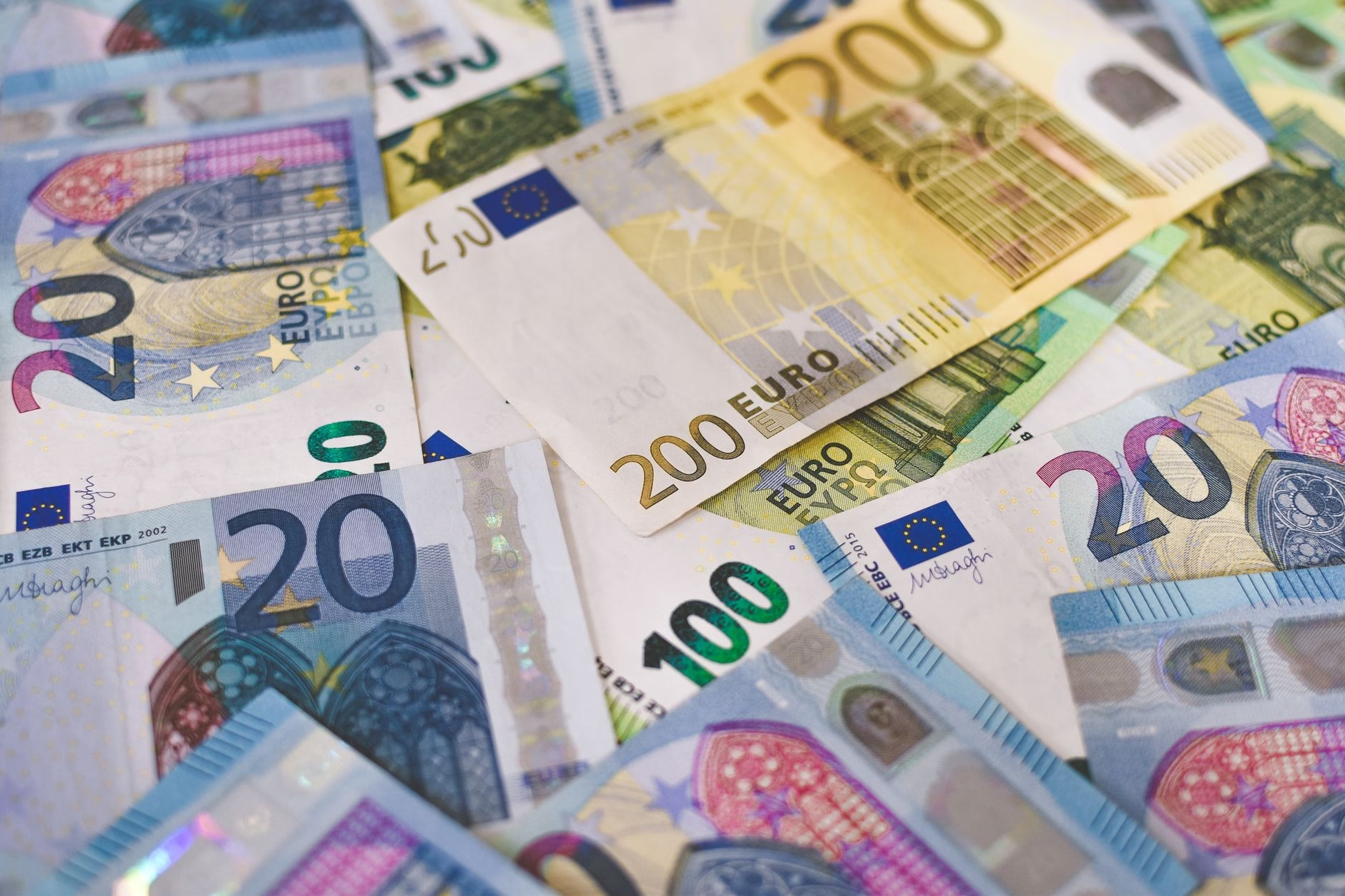
The euro is used in 20 European Union nations, collectively referred to as the Eurozone. These include popular destinations such as France, Spain, Italy, Germany, Portugal, and Greece. In addition, several smaller non-EU countries and territories have adopted the euro, including Andorra, Monaco, San Marino, Kosovo, and Montenegro.
The advantage for travelers is convenience. You can use the same currency from Lisbon to Athens without worrying about exchange rates or multiple withdrawals. For multi-country itineraries covering much of Western or Southern Europe, sticking within the Eurozone simplifies spending and financial management.
Countries with Their Own Currencies
Outside of the Eurozone, you will encounter a fascinating mix of local currencies. For instance:
- United Kingdom: Pound sterling (GBP)
- Switzerland and Liechtenstein: Swiss franc (CHF)
- Norway: Norwegian krone (NOK)
- Sweden: Swedish krona (SEK)
- Denmark: Danish krone (DKK)
- Poland: Polish zloty (PLN)
- Czech Republic: Czech koruna (CZK)
- Hungary: Hungarian forint (HUF)
Each of these nations maintains control over its currency, which means exchange rates fluctuate against the euro and the US dollar. Understanding this ahead of time can help you make informed decisions about when and where to exchange money.
Currency Exchange: What You Need to Know
Having a solid strategy for currency exchange can make a measurable difference in your travel costs. Poor exchange choices can quickly add up to lost value, while wise decisions can help you stretch your travel budget further.
Exchange Options at a Glance
-
ATMs: The most reliable and often most cost-effective option for obtaining local currency. European ATMs are widely available, and withdrawing moderate amounts directly from your bank account typically provides exchange rates close to the interbank rate. Always choose to be charged in the local currency rather than your home currency to avoid hidden conversion fees.
-
Currency Exchange Offices: Found in airports, train stations, and tourist districts. They offer convenience but usually less favorable rates due to higher commissions. If you must use them, compare rates at several counters before committing.
-
Banks: Local banks can offer competitive rates, but their opening hours may be limited. For long stays, setting up a local or international account with a European bank can be worthwhile.
-
Online Money Solutions: Modern fintech companies, such as Revolut, Wise, or N26, allow travelers to hold multiple currencies in one account and offer real-time exchange rates. These digital banks are becoming a preferred option for regular European travelers.
Timing Your Exchanges
Currency markets fluctuate every day, and while it is impossible to predict movements precisely, a few general tips help. Avoid exchanging large sums at airports where rates are least favorable. If you will need cash in the local currency for taxis or small purchases upon arrival, withdraw a small amount and use ATMs or digital payments for the remainder of your trip.
Paying by Card and Going Cashless
Europe has rapidly embraced digital payments, with cities such as Stockholm, Amsterdam, and London leading the way toward cashless transactions. However, not every location is entirely digital, so knowing what to expect country by country will make your travel smoother.
Credit and Debit Cards
Visa and Mastercard are widely accepted almost everywhere in Europe. American Express and Discover are accepted at fewer locations, particularly outside the main tourist areas. It is a good idea to carry at least two cards from different providers in case one encounters a technical issue or is declined.
Before you travel, notify your bank about your destinations and check whether foreign transaction fees apply. Many travel-friendly credit cards today offer fee-free overseas purchases, travel insurance benefits, and favorable exchange rates.
Contactless and Mobile Payments
Tap-to-pay technology is popular across Europe. Mobile wallets such as Apple Pay and Google Pay can be linked to your cards and used almost anywhere in major cities. In regions with smaller merchants, particularly in Eastern or rural Europe, physical cards or cash may still be necessary.
When and Why You Still Need Cash
While Europe is modernizing quickly, there are still situations where cash is preferred or even necessary. Understanding these circumstances helps you avoid unnecessary stress.
- Rural areas and small towns: Village markets, local buses, and family-run guesthouses often accept only cash.
- Public restrooms and tips: Small coins are often required for restrooms in train stations or public squares, and casual tipping still relies heavily on cash in some places.
- Local festivals and street food: Summer fairs, Christmas markets, and food stalls often operate on a cash basis, especially in Germany and Central Europe.
It is best to carry a modest reserve of local currency for these moments. Keep small denominations on hand, as larger notes might be difficult to use for minor purchases.
Avoiding Common Currency Mistakes
Even experienced travelers can make small financial mistakes abroad. Being aware of common pitfalls can help you save money and time.
- Dynamic currency conversion: When paying by card, always select to be charged in the local currency rather than your home currency. Accepting conversion at the terminal often results in much worse exchange rates.
- Hidden bank fees: Some banks charge additional withdrawal fees overseas. Know your bank’s policies before you leave and consider switching to a travel-friendly account.
- Carrying too much cash: Traveling with large sums is unsafe and unnecessary. Instead, withdraw smaller amounts as needed.
- Ignoring exchange rates: Keep an eye on currency fluctuations if you plan to travel across multiple countries. Using mobile apps like XE Currency or Revolut allows you to track rates in real time.
Budgeting Smartly Across Borders
One of the joys of traveling in Europe is how easily you can move between countries. However, this also means costs can vary noticeably. A dinner in Copenhagen or Zurich might be three times the price of one in Budapest or Krakow.
Plan your travel budget region by region. The European north and west generally have higher living costs, while Central and Eastern Europe remain more budget friendly. Adjust your spending expectations accordingly. Multi-currency digital accounts can help you manage funds in separate wallets, giving you better control of your expenses across different monetary zones.
Conclusion: Spending Wisely for a Stress-Free European Adventure
Understanding the currency landscape of Europe gives you freedom and confidence on the road. With thoughtful planning—knowing which countries use the euro, how to get the best exchange rates, and when to rely on digital payments—you can focus on what really matters: enjoying your journey. Whether you are sipping espresso in Rome, exploring castles in Prague, or hiking through the Swiss Alps, handling money with ease means you spend less time worrying about logistics and more time savoring the moment.
Smart financial preparation is the invisible companion of every great trip. Pack light, spend wisely, and let your currency knowledge be as strong as your sense of adventure.
Further Reading
3 Day Istanbul Itinerary for First Time Visitors
Travel to Somalia; How I Traveled to Mogadishu