
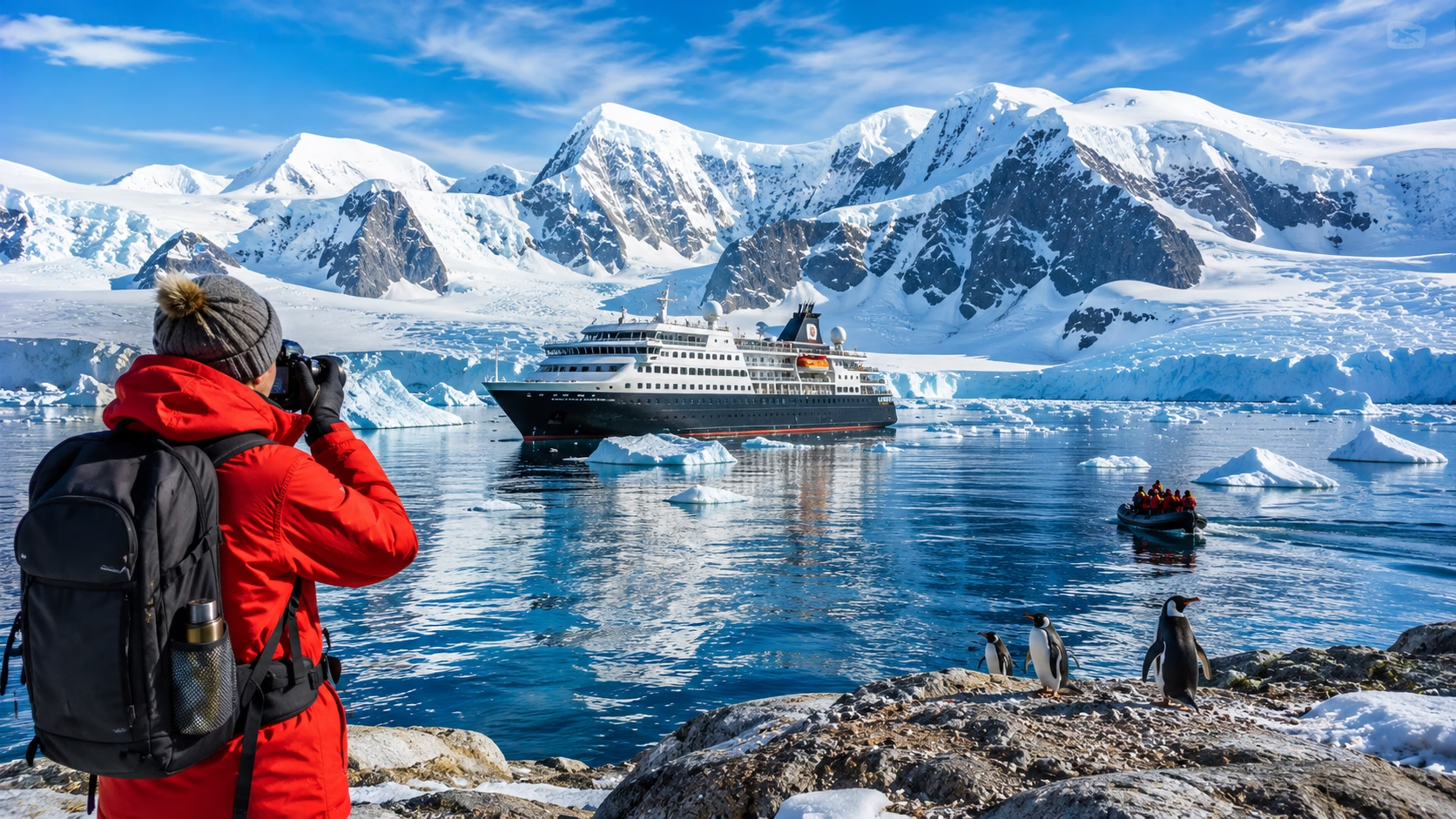
Few places on Earth capture the imagination quite like Antarctica. A land of pure white horizons, towering glaciers, and surreal silence, this remote continent sits at the limits of human exploration. January, the height of the Antarctic summer, is one of the most extraordinary times to visit. The sea ice recedes, wildlife flourishes, and long daylight hours reveal the continent’s raw beauty in full. For adventurous travelers, this is the season of discovery by ice-strengthened cruise, kayak, or foot on the world’s last truly wild frontier.
- January delivers intense wildlife activity: penguin chicks, abundant seals, and frequent whales, offering unforgettable animal encounters.
- Pack layered waterproof gear, UV protection, nitrile gloves, and polar travel insurance; be ready for rapid weather changes and limited medical facilities.
- Book early with an authorized operator, choose routes (Antarctic Peninsula, South Georgia, Falklands), and consider kayaking, camping, or guided hikes.
In this guide, you will learn exactly what makes January a prime month for Antarctic travel. You will gain practical insights on weather, wildlife encounters, cruise routes, photography tips, and everything you need to prepare for an unforgettable journey. Whether you dream of walking among penguin colonies, watching whales breach beside your ship, or setting foot on the seventh continent for the first time, this article will help you understand what that experience involves and how to make the most of it.
Why January is the Best Time to Visit Antarctica
January sits in the heart of the Antarctic summer, offering the most favorable conditions for exploration. The weather, though unpredictable, is generally at its mildest with average temperatures hovering around zero degrees Celsius on the Antarctic Peninsula. This relative warmth allows for more extensive landings, safe navigation through ice-free channels, and ideal light for photography.
One of the most remarkable aspects of January is the constant daylight. The sun barely dips below the horizon, bathing the landscape in a soft golden glow at midnight and giving you nearly twenty four hours to experience the environment. This extended daylight also boosts your chances of encountering active wildlife during every part of the day.
Tour operators plan their most comprehensive itineraries during this month, taking advantage of open seas and accessible landing sites. While this is considered peak season, it is also when Antarctica is at its most alive.
Wildlife Encounters: A Season of New Life
If wildlife viewing is high on your list of reasons to visit Antarctica, January will not disappoint. This is the time when many species are at their most dynamic and visible.
- Penguin Chicks: Colonies are teeming with activity as Gentoo, Chinstrap, and Adélie penguin chicks hatch and begin their first forays outside the nest. Watching parent penguins feed their young amid the vast icy landscape is one of the quintessential Antarctic experiences.
- Seal Sightings: Weddell and Crabeater seals often rest on ice floes, while curious Antarctic fur seals become increasingly visible on the beaches of South Georgia and the South Shetland Islands.
- Whale Watching: As the nutrient-rich waters of the Southern Ocean peak in productivity, whales gather in impressive numbers. Humpbacks, minkes, orcas, and occasionally blue whales can often be seen feeding or breaching near the surface.
- Birdlife: The skies and cliffs buzz with activity from petrels, skuas, and Antarctic terns, making this a rewarding month for bird enthusiasts.
Photographers will find the lighting conditions exceptional, with the Antarctic sun casting subtle hues over the icy landscape and often creating a surreal pastel horizon at midnight.
Weather and Daylight: What to Expect in January
While conditions are relatively mild compared to other months, travelers should remember that Antarctica’s climate remains harsh and changeable. Expect daytime temperatures close to freezing with wind chills that can drop dramatically. Sudden snow flurries or dense fog may occur even on clear days, so flexibility is vital.
Related Posts:
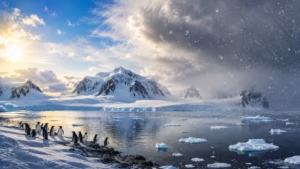
The long daylight hours are one of January’s major advantages. Continuous sunlight provides almost uninterrupted opportunities for landings, zodiac excursions, and photography. The unique quality of the light, soft yet bright, makes every iceberg and snow ridge appear sculpted in high relief. This constant brightness can be both invigorating and disorienting, so bringing a good eye mask for rest periods is recommended.
Packing layers and high quality waterproof gear is essential. The key is to stay warm and dry while maintaining mobility for exploring by boat or on foot.
Cruise Routes and Expedition Options
Reaching Antarctica is no simple feat, and traveling in January gives you the widest selection of expedition cruises and routes. Most journeys depart from the southern tip of South America, particularly Ushuaia, Argentina.
Antarctic Peninsula Adventures
The Antarctic Peninsula is the most accessible region and offers breathtaking scenery filled with glaciers, sparkling bays, and dramatic ice formations. Cruises often visit locations such as Paradise Bay, Port Lockroy, and Neko Harbor, where travelers can make landings to walk among penguin colonies or hike to panoramic viewpoints.
South Georgia and the Falkland Islands
Extended cruises include the Falklands and South Georgia for travelers who want deeper insight into the region’s history and wildlife. South Georgia, known as the Serengeti of the Southern Ocean, is home to massive king penguin colonies and relics of early whaling stations.
Expedition Activities
In January, favorable conditions make it possible to join special programs like kayaking, camping on the ice, or snowshoeing. Each activity offers a different perspective of the frozen wilderness and enhances the sense of exploration.
Cruise operators vary widely in comfort and itinerary. Some focus on small ship expeditions emphasizing education and expert guidance, while others provide a more luxurious experience. Booking early, often a year in advance, is advised since the most desirable routes fill up quickly.
Planning and Preparation: Making the Most of Your Journey
Because Antarctica is unlike any other travel destination, preparation plays a key role in the quality of your experience.
- Documentation and Permits: Visitors cannot travel to Antarctica independently. All trips must be arranged through an authorized operator complying with the Antarctic Treaty System.
- Health and Fitness: Although expeditions accommodate most fitness levels, travelers should be comfortable with short hikes, boat transfers, and occasionally slippery terrain.
- Packing Essentials: Waterproof outerwear, nitrile gloves, layered thermal clothing, UV protection, and high-quality sunglasses are essential. Camera gear should be protected from moisture with sealable bags or waterproof cases.
- Sustainability: Respect for the fragile ecosystem is paramount. Visitors must adhere to strict environmental guidelines, keeping a safe distance from wildlife and avoiding contamination of habitats.
Travel insurance with medical evacuation coverage specific to polar regions is non-negotiable. Medical facilities are extremely limited, and evacuation can be costly.
Photography and Capturing the Perfect Antarctic Moment
For photographers, January offers dreamlike conditions. The low angle of the sun produces soft light and long shadows that reveal the detail of snow textures and ice formations. Icebergs display every shade of blue imaginable, and wildlife activity gives endless creative possibilities.
Bring a reliable zoom lens for wildlife, an extra set of gloves for easy camera handling, and sufficient memory cards since the sheer abundance of photo opportunities can quickly fill storage. However, do not spend the entire trip behind the lens. Antarctica’s power lies in its ability to silence you into awe. Sometimes, the best memory is not a photograph but the hush of a world untouched.
Conclusion: The Call of the White Continent
Traveling to Antarctica in January is not simply a vacation; it is a journey of perspective. The endless daylight, the mirror-like bays filled with glacial reflections, and the vibrant life thriving against the odds leave a profound impression. Visiting at this time offers the perfect balance of accessibility, wildlife abundance, and favorable cruising conditions.
Every traveler returns with a sense of humility and wonder at having glimpsed one of Earth’s most pristine places. If you have ever dreamt of standing on the edge of the world, January offers the ideal window to make that dream a breathtaking reality.
Further Reading
Best Beaches in Southern Europe
Cheapest Countries to Visit in Africa
Travel to Somalia; How I Traveled to Mogadishu