
Few places on Earth capture the imagination quite like Antarctica. This frozen continent remains one of the last true wildernesses, untouched, vast, and awe inspiring. It is a destination of pure extremes where colossal glaciers, sculpted icebergs, and colonies of penguins dominate a world of silence and raw beauty. For travelers who crave adventure and authenticity, setting foot on Antarctica is not just a trip; it is a pilgrimage to the most remote frontier on the planet.
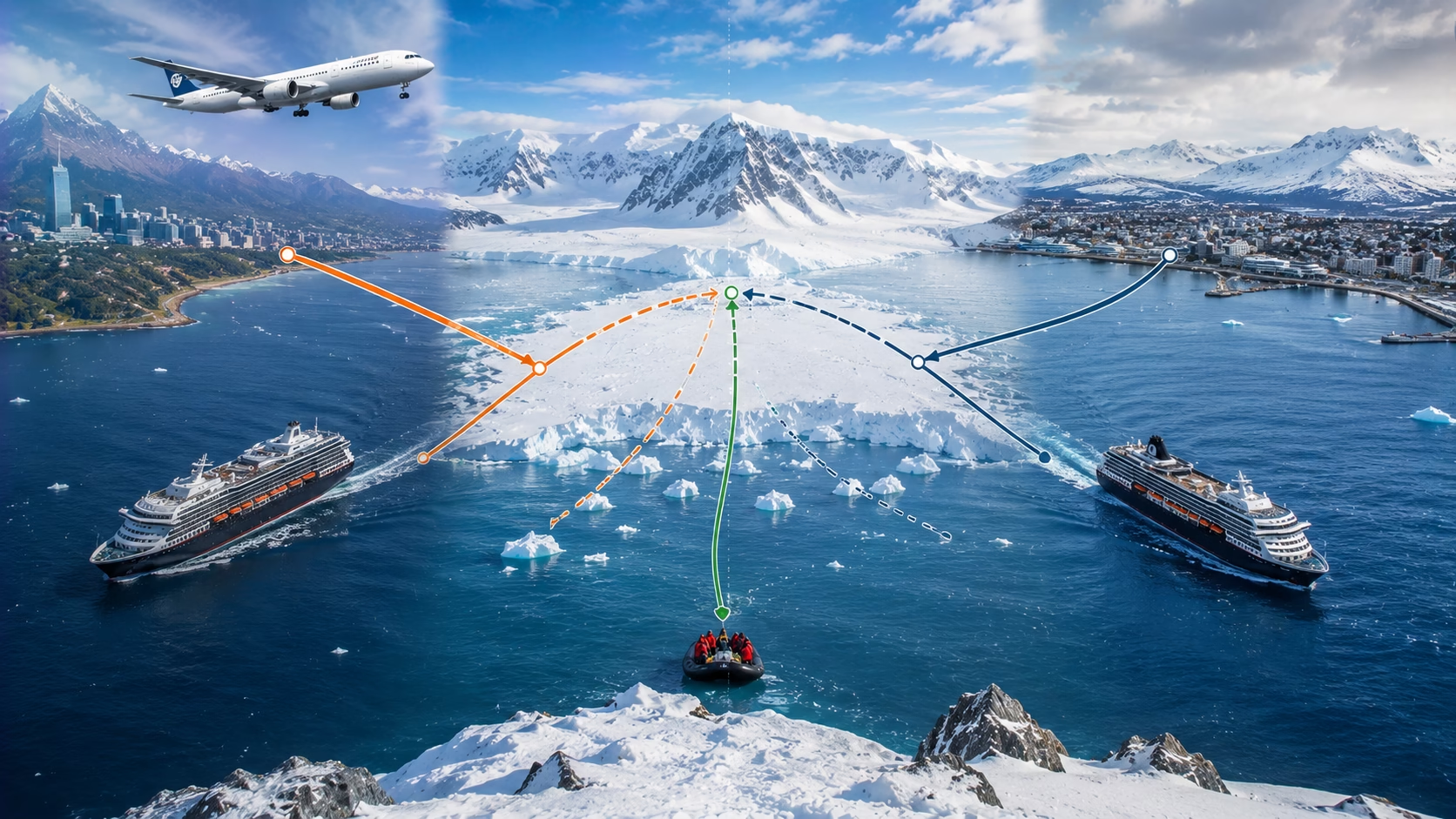
But despite its growing popularity among expedition travelers, visiting Antarctica is not as straightforward as booking a flight. The journey begins long before you see any ice, and how you choose to reach the continent will shape your entire experience. There are several distinct travel routes, each offering its own rhythm, views, and sense of adventure.
In this article, we will compare the main travel routes to Antarctica, explaining the differences between them, what to expect, and how to choose the one that fits your interests, time, and comfort level.
The Classic Route from Ushuaia, Argentina
When most people imagine their journey to Antarctica, this is the route that comes to mind. Ushuaia, at the southern tip of Argentina, is known as the world’s southernmost city and serves as the gateway for the vast majority of Antarctic cruises.
What the Route Entails
From Ushuaia, ships set sail across the Drake Passage, a 600 mile wide body of water separating South America from the Antarctic Peninsula. The crossing generally takes around two days each way, and what happens during that time is part of what makes this route legendary.
The Drake Passage can be unpredictable. Some days, the seas are calm and glassy, revealing albatrosses gliding above. On others, it can be rough and exhilarating, with swells that remind travelers how far from ordinary they have ventured. Either way, it gives you a visceral sense of the isolation and scale of Antarctica’s distance from the rest of the world.
Advantages of the Ushuaia Route
- It offers the most affordable and most common itineraries to Antarctica.
- There is a large choice of vessels, from small expedition ships to premium cruise liners, providing flexibility in cost and level of comfort.
- The voyage allows for wildlife viewing even before reaching Antarctica, with seabirds and whales frequently spotted along the way.
Considerations
Related Posts:
- Travelers must be prepared for possible rough seas during the crossing.
- The journey involves four days at sea in total, which can be tiring for those with limited vacation time.
For those seeking a sense of adventure and tradition, the Ushuaia route remains unmatched. It is the quintessential Antarctic experience.
Flying Over the Drake Passage from Punta Arenas, Chile
For travelers who prefer to skip the unpredictable waters of the Drake Passage, there is an alternative. Flying from Punta Arenas in southern Chile allows visitors to reach King George Island, one of the South Shetland Islands just off the Antarctic Peninsula, in about two hours. From there, passengers board small expedition ships already positioned near the continent.
What the Route Entails
This “fly and cruise” option is designed to maximize time in Antarctica while minimizing time at sea. After arriving in Punta Arenas, travelers typically spend a night for weather clearance before taking the flight across the Southern Ocean. Once in Antarctica, the adventure begins immediately, with Zodiac landings, iceberg cruising, and wildlife encounters.
Advantages of the Punta Arenas Route
- It eliminates the two day sea crossing in each direction, saving valuable time.
- It is ideal for travelers prone to seasickness.
- It allows more focus on the Antarctic experience itself, with longer days spent exploring rather than sailing.
Considerations
- Flights can be delayed or rescheduled due to Antarctica’s unpredictable weather.
- It tends to be more expensive because of the charter flights and limited availability.
This route is perfect for travelers who value comfort and efficiency while still wanting the full on Antarctica experience.
Extended Voyage from South Georgia and the Falkland Islands
For travelers who desire a more comprehensive journey through the southern seas, longer expeditions combining the Falkland Islands, South Georgia, and the Antarctic Peninsula offer incredible diversity. These voyages usually depart from Ushuaia and can last between 18 and 24 days.
What the Route Entails
Such trips usually begin by exploring the wildlife rich Falklands before continuing to South Georgia, known for its dramatic landscapes, abundant penguin colonies, and the historical legacy of explorer Sir Ernest Shackleton. Ships then continue southward to the Antarctic Peninsula, completing a grand circuit through the most beautiful and wildlife filled waters on Earth.
Advantages of the South Georgia and Falklands Route
- Offers an unmatched variety of landscapes and wildlife encounters.
- Provides insight into the full breadth of the Southern Ocean’s ecosystem.
- Ideal for photographers and naturalists seeking depth over speed.
Considerations
- The journey is considerably longer, requiring more time and a higher budget.
- Weather can affect the schedule, and travelers must be flexible.
This route is for travelers who want a once in a lifetime expedition, combining history, nature, and exploration in one sweeping voyage.
Reaching Antarctica from New Zealand or Australia
A less common yet deeply rewarding path to Antarctica begins from either Hobart in Tasmania or Invercargill and Christchurch in New Zealand. This route accesses the Ross Sea region and the eastern side of the continent, an area visited by only a handful of ships each year.
What the Route Entails
These expeditions typically last between 25 and 35 days and follow the path of early explorers like Captain James Ross and Robert Falcon Scott. The journey passes through remote subantarctic islands such as Macquarie Island, which is home to vast penguin colonies and other rare wildlife, before pressing into the heart of East Antarctica.
Advantages of the New Zealand and Australia Route
- Provides access to historic expedition sites, massive tabular icebergs, and rare wildlife.
- Offers a sense of remoteness unmatched by the shorter routes.
- Ideal for travelers seeking in depth exploration and scientific insight.
Considerations
- Voyages are extremely limited, often with long waiting lists.
- Prices are significantly higher, reflecting both length and exclusivity.
- The sea journey can be lengthy and requires patience.
This route suits explorers with a passion for history, isolation, and grandeur, those who want to trace the footsteps of pioneers and see the wilder corners of the Earth.
Choosing the Right Antarctic Route for You
The decision ultimately depends on what you want from your Antarctic expedition.
- For first time visitors and adventure enthusiasts, sailing from Ushuaia provides the perfect introduction.
- For comfort seekers or those short on time, flying from Punta Arenas is a good balance.
- For wildlife and history lovers, the extended route through South Georgia and the Falklands offers the most dramatic range of experiences.
- For explorers drawn to remoteness and legacy, the voyage from New Zealand or Australia opens doors to the Ross Sea’s farthest reaches.
When planning your journey, consider also the season, as Antarctic travel generally runs from November to March. Early summer offers pristine snow and courtship displays, while late summer brings active wildlife and the chance to see young chicks and seals.
Conclusion: Finding Your Path to the White Continent
Traveling to Antarctica is not merely a vacation; it is a statement of curiosity and courage. Whether you sail across the tempestuous Drake Passage, fly into the calm serenity of King George Island, or trace the ghostly routes of the great explorers from New Zealand, each path offers a profound connection to the planet’s final frontier.
The right route depends on your spirit of adventure, tolerance for the elements, and the kind of story you hope to tell when you return. However you choose to travel, the reward is the same: stepping onto a land that few have ever seen and experiencing a world that reminds us of the true scale, mystery, and beauty of our Earth.
Further Reading
Best Beaches in Southern Europe
Cheapest Countries to Visit in Africa
Travel to Somalia; How I Traveled to Mogadishu
Free Family Things to do in Chicago Today
How to Spend Four Days in Hong Kong